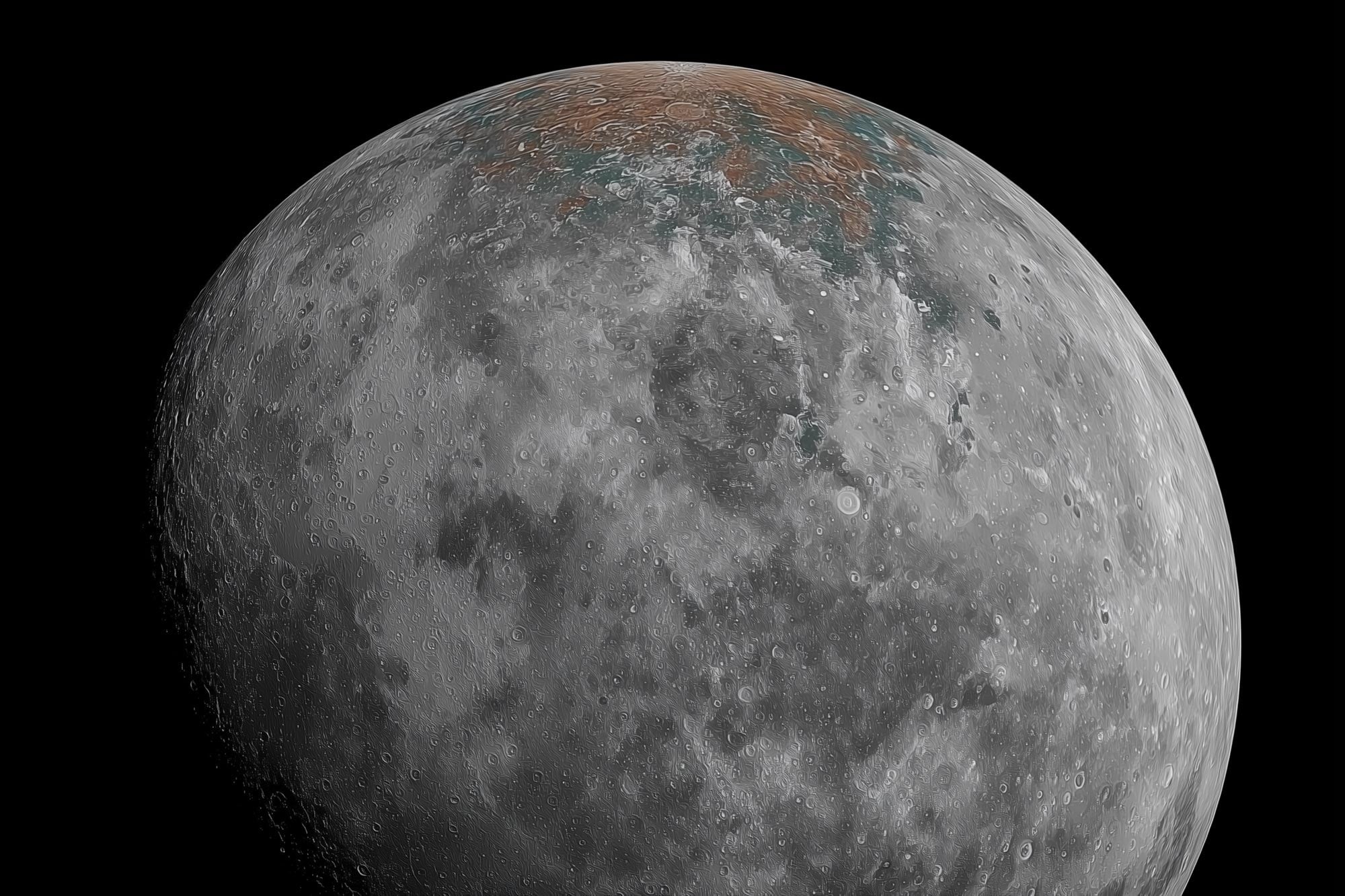
The James Webb Space Telescope (JWST) has provided astronomers with their first detailed look at the surface of a rocky exoplanet, revealing a world that is starkly different from Earth. LHS 3844 b, a “super-Earth” located just 48.5 light-years away, appears to be a dark, airless rock with no atmosphere and a surface composition more akin to Mercury or the Moon than to our own planet.
This discovery marks a significant shift in exoplanet research. While previous studies have primarily focused on detecting atmospheres, this new analysis dives into exoplanetary geology, allowing scientists to determine what the ground beneath these distant worlds is actually made of. The findings, published in Nature Astronomy, suggest that Earth-like geological processes, such as plate tectonics driven by water, are not universal features of rocky planets.
A World Without an Atmosphere
LHS 3844 b is approximately 30% larger than Earth but orbits its host star—a cool red dwarf—with extreme speed, completing a revolution every 11 hours. This proximity places the planet at a distance of only three stellar diameters from its star, resulting in a tidally locked state. One side of the planet perpetually faces the star, baking under intense heat, while the other remains in eternal darkness.
The dayside temperature reaches roughly 1,000 Kelvin (725°C or 1,340°F). Despite this extreme environment, JWST’s Mid-Infrared Instrument (MIRI) was able to detect faint infrared light emanating directly from the planet’s surface. This data allowed the research team, led by Sebastian Zieba of the Center for Astrophysics | Harvard & Smithsonian and MPIA Director Laura Kreidberg, to rule out the presence of an atmosphere.
“Thanks to the amazing sensitivity of JWST, we can detect light coming directly from the surface of this distant rocky planet. We see a dark, hot, barren rock, devoid of any atmosphere,” said Laura Kreidberg.
Why This Matters: The Absence of Earth-Like Crust
The most striking finding is not just the lack of air, but the composition of the ground itself. By analyzing the infrared spectrum of the planet, researchers compared the data against models of known minerals from Earth, the Moon, and Mars.
The results decisively ruled out an Earth-like crust. Earth’s surface is rich in silicate minerals like granite, which form over billions of years through plate tectonics and the presence of water. This process involves melting, mixing with the mantle, and the rising of lighter minerals to the surface.
LHS 3844 b lacks this granitic crust. This absence suggests two critical insights:
1. No Plate Tectonics: The planet likely does not experience Earth-style plate tectonics, or the process is entirely ineffective.
2. Little to No Water: Since water is a key lubricant for tectonic activity on Earth, its absence on LHS 3844 b implies the planet is extremely dry.
A Surface of Basalt and Dust
Instead of granite, the spectral data points to a surface dominated by basalt or mantle-derived rocks, rich in magnesium and iron. These materials are similar to the volcanic rock found on Earth’s ocean floors or the lunar maria.
Researchers identified two plausible scenarios for the planet’s current appearance:
- Fresh Volcanic Rock: The surface could be covered in solid basaltic rock, implying recent or ongoing volcanic activity.
- Space-Weathered Regolith: The surface may be covered in “regolith”—a layer of fine, broken-down rock particles caused by constant meteorite impacts and stellar radiation. This process, known as space weathering, breaks down hard rock and darkens the surface by adding iron and carbon.
Is the Planet Geologically Dead?
To distinguish between these scenarios, scientists looked for signs of active volcanism. Active volcanoes often release gases, particularly sulfur dioxide (SO2), which should be detectable by MIRI.
However, no trace of SO2 was found. This lack of volcanic gas strongly suggests that LHS 3844 b is geologically inactive. Consequently, the “space-weathered regolith” scenario is more likely. The planet’s surface is probably old, broken down, and darkened, closely resembling the barren landscape of Mercury.
Future Observations: Mapping the Texture
While the current data provides a chemical composition, it does not fully reveal the physical texture of the surface. Is it smooth solid rock, or loose gravel and dust?
The research team plans further JWST observations to analyze how light reflects off the planet at different angles. Rough surfaces (like loose regolith) and smooth surfaces (like solid basalt slabs) reflect light differently. This technique, previously used to study asteroids in our Solar System, will help clarify whether LHS 3844 b is a monolithic rock or a dusty wasteland.
“We are confident the same technique will allow us to clarify the nature of LHS 3844 b’s crust and, in the future, other rocky exoplanets,” Kreidberg noted.
Conclusion
LHS 3844 b stands as a testament to the diversity of planetary formation. It is a hot, airless super-Earth with a basaltic surface shaped by eons of space weathering rather than internal geological activity. This discovery highlights that Earth’s unique combination of water, tectonics, and atmosphere is not a default outcome for rocky planets, but rather a rare and specific set of circumstances.