


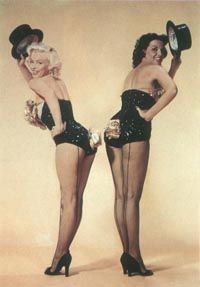
More press attention was supposed to be a headache for Marilyn Monroe. Instead, it quietly shifted her standing at Twentieth Century-Fox. The studio was still reeling from the production of Niagara, but by June 1, 1952, the mood had changed. Fox handed her a surprise birthday gift. They announced she would play Lorelei Lee in the film adaptation of Gentlemen Prefer Blondes.
The Broadway musical had been a massive hit. Carol Channing originated the role and kept it running for over two years. Hollywood wanted in. Columbia tried to secure the rights for their own blonde comedy star, Judy Holliday. Fox originally wanted it for Betty Grable.
Grable had been the studio’s top draw. She was famous for her million-dollar legs. In the late 1940s, many young actresses were molded to look like her. Marilyn’s tenure at Fox had failed during this era. By 1952, however, the dynamic had flipped. Marilyn’s star was eclipsing Grable’s.
The Pay Gap and The Contract
Production began in November 1952. The financial disparity on set was stark. Jane Russell, the other lead, reportedly earned between $100,000 and $200,000. Marilyn was under contract for just $1,500 per week. She earned about $18,000 for the entire picture.
Grable might have cost Fox $150,000 for the same role. Marilyn knew she was being shortchanged. She demanded her own dressing room. It was a power move. She told Fox executives, “I am the blonde, and it is Gentlemen Prefer Blondes.”
The Morning Ritual
The press loved a feud. They wanted to report on a rivalry between the two sex symbols. It never happened. Marilyn and Jane Russell built a strong, friendly bond during filming. Russell understood the industry. She knew how harsh and insensitive it could be.
Marilyn had a serious issue with tardiness. It got worse during this shoot. Her makeup artist, Whitey Snyder, figured out the real cause. She wasn’t lazy. She was terrified of the cameras. She needed time to build up her nerve.
Howard Hawks, the director, hated actor frailties. He was furious at her delays. The tension on set was high. Snyder shared his suspicions with Russell. Russell started making a point of visiting Marilyn’s dressing room every morning.
She would walk the frightened young star onto the set. It was a small act of kindness. It kept the production moving.
Dedication Behind the Delay
Hawks might have been angry about the schedule. He couldn’t fault her work ethic. Marilyn impressed many on set. She was willing to work hard. She rehearsed long after everyone else was tired. She asked for retakes of scenes she felt weren’t good enough. She demanded excellence.
The image of the ditzy blonde was a mask. Behind it was a performer who knew exactly what she wanted. She got the role. She got the room. And she proved she belonged there.
But the cameras didn’t capture everything. The fear was real. The tardiness was a shield. It kept her safe until she felt ready to step into the light.
The public never saw the trembling hands or the deep breaths before each take. They only saw the sparkle. The charisma. The perfection.
It’s easy to forget how fragile that star was. How much it cost.
The film made her a legend. But the cost was high.
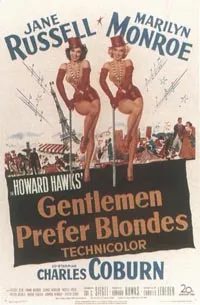

Marilyn knew she had struck gold. The role wasn’t just a part. It was a career-defining opportunity in a heavily publicized film that other, more respected stars had fought over. She understood this was her shot at critical acclaim. Her chance to finally be taken seriously by an industry that often saw her as nothing more than a pretty face.
She would later develop a reputation for causing chaos on set. But that wasn’t always the case. In her early years, she worked with some of Hollywood’s most legendary directors. Sometimes, she worked with them more than once.
Howard Hawks was one of those directors. He had already directed Marilyn in Monkey Business. Hawks held a specific philosophy. He believed that “A great personality illuminates the screen.” To him, if the final product worked, any on-set drama didn’t matter. It was irrelevant.
Hawks had a long career. He filled movie screens with strong films. Think John Wayne. Cary Grant. Humphrey Bogart. Katharine Hepburn. John Barrymore. Carole Lombard. Lauren Bacall. His name is synonymous with larger-than-life actors. And Marilyn Monroe certainly fit into that class of performer.
The Mechanics of Gentlemen Prefer Blondes
The film represents a curious mix. It combines Hawks’s key themes with characteristics common to his work. He was best known for action films. He tended to stress masculine values.
His storylines often focused on a pair of tough male professionals. They were usually opposites in type. But their opposition wasn’t a source of friction. It was complementary.
Marilyn Monroe and Jane Russell assumed those usually male roles. They played opposite yet complementary types. Lorelei was blonde. Dorothy was brunette. Lorelei wanted to marry for money. Dorothy intended to marry for love. Lorelei was presented as the epitome of the dumb blonde. Dorothy was clever and resourceful.
Despite these extreme differences, the two characters performed together on stage. They joined forces to resolve problems in romance. The film focuses on the point of view of Lorelei and Dorothy. They survey the male population for suitable husbands or companions.
Subverting the Male Gaze
By doing this, Gentlemen Prefer Blondes seems to parody those films where predatory male characters continually eye women as objects of desire.
Nowhere is this more evident than in the production number “Ain’t There Anyone Here for Love.” Dorothy scrutinizes the scantily clad men of the U.S. Olympic team. They flex their muscles in front of her.
The dynamic shifts. The camera looks at them. The women watch. It’s a reversal of the standard Hollywood formula.
Marilyn’s performance here wasn’t just about looking good. It was about playing a character who held the power. Who made the choices.
This role allowed her to show range. It gave her a platform. She wasn’t just being looked at. She was looking back.
Hawks saw the value in that personality. He let it shine.
The film succeeded. The audience responded.
But did it change how critics viewed her? Or was she still just the blonde?
The tension between her star power and her acting chops remained. It always would.
Yet, in this moment, with Hawks guiding the camera, she was exactly what the screen needed.

The Empty Male Space
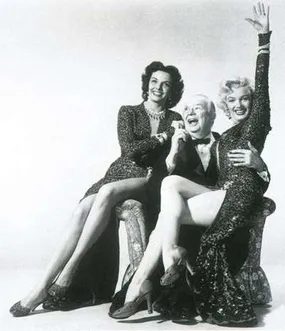
The movie’s dominance by Marilyn and Jane isn’t just about their charisma. It’s about the vacuum they leave behind. There are no strong, dashing leading men in Gentlemen Prefer Blondes. The male figures orbiting Dorothy and Lorelei are a odd assortment of weaklings. Charles Coburn plays a henpecked elderly millionaire. He is jowly and defeated. George Winslow is a little boy with a roving eye. Elliott Reid plays a dull private detective. Then there is Tommy Noonan, the weak-willed son of a socially prominent family. He wears spectacles. He looks soft.
“Marilyn and Jane Russell simply blow their male counterparts off the screen.”
From the first frame to the final shot, the women overpower them. It is a total domination. Critics at the time attacked the film for this. They pointed to the “Diamonds Are a Girl’s Best Friend” number. The set decor there was considered obviously masculine in its construction. Female bodies were lashed to chandeliers. They provided structural support. It was a visual metaphor that didn’t fly well with early reviewers.

The Voice Behind the Blonde
Marilyn Monroe’s character, Lorelei Lee, delivered lines that still feel awkward today. “I can be smart when it’s important, but most men don’t like it” made even Marilyn cringe when she read the script. It was a sharp reminder of the limited roles available to her.
Yet Gentlemen Prefer Blondes stands as one of her finest films. The movie works because of professionalism. Marilyn and director Howard Hawks may have clashed off-screen. That friction never touched the final cut. The result remains polished.
The production numbers are the film’s heartbeat. Marilyn and Jane Russell were not known for singing or dancing. They had to work hard to pull off the choreography. The effort paid off. Their performance numbers are dynamic. They sparkled on screen.
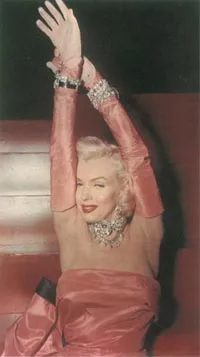
“Diamonds Are a Girl’s Best Friend” became her signature song.
The number highlights her beauty. It captures grace. It also shows a young actress at a high point. In retrospect, the scene signifies a moment of control. She held her destiny in her hands. It was fleeting. It was joyful.
Critics generally liked the movie. Many still focused on her body. They ignored her performance. The few who discussed her talents argued over her skills. They debated if she could truly sing or dance.
Time magazine reported a specific controversy. Darryl F. Zanuck expected backlash. He thought audiences would claim the pleasing voice of Lorelei wasn’t Marilyn’s. So he signed an affidavit. He affirmed the voice on the soundtrack was hers.
Awards followed the release. Marilyn received a star on the Hollywood Walk of Fame. The momentum built. The next chapter in her career was already in motion.


