You look at a mayfly and it’s gone in a day. You look at a tortoise and wonder how it keeps ticking for a century. It isn’t just luck. It’s biology, genetics, and a whole lot of environmental luck.
Animals don’t all follow the same clock. Size matters. Habitat matters. Diet matters. But some creatures? They cheat. They break the rules we think apply to everyone else. Scientists are obsessed with them. Not because they want to live forever, but because understanding them might help us understand aging itself.
Let’s look at the outliers. The ones that refuse to clock out.
The Immortal Jellyfish: A Biological Reset Button
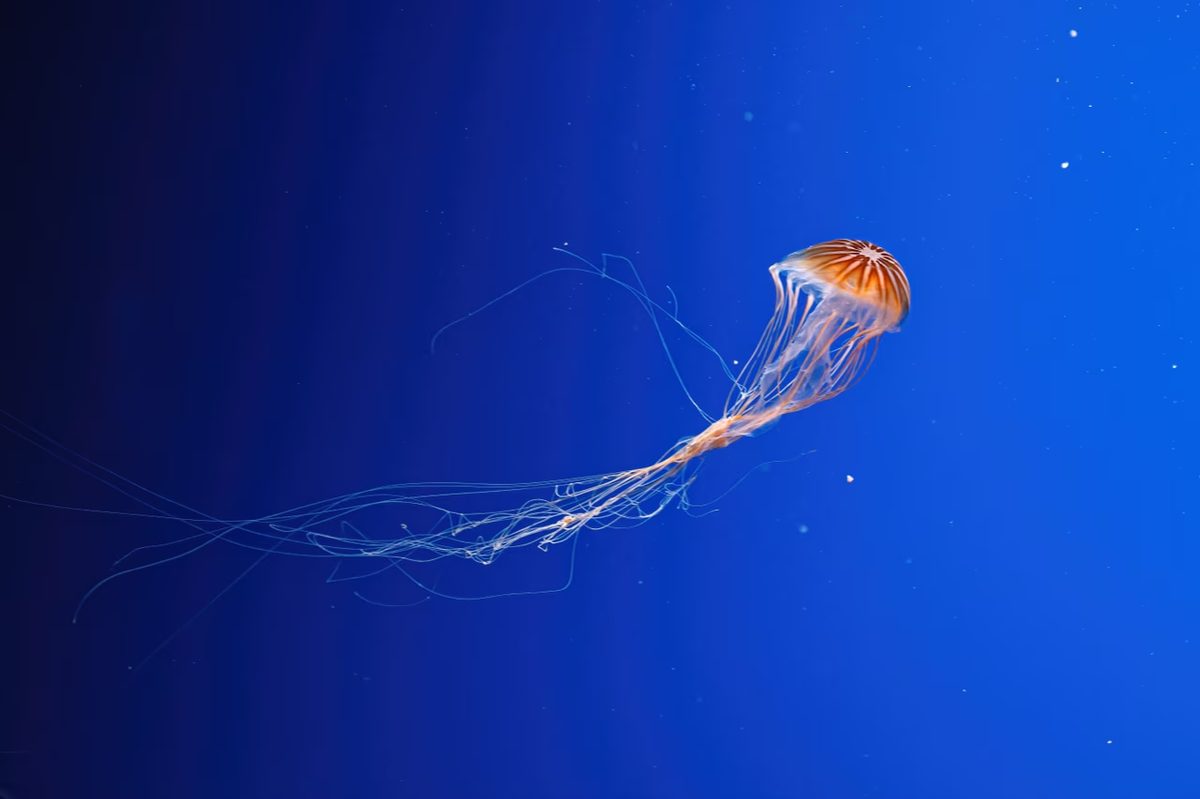
Meet Turritopsis dohrnii. It’s tiny. Less than 5 millimeters across. Hard to see with the naked eye. But in the lab, it’s a superstar.
This jellyfish doesn’t die of old age. Not in the traditional sense. When it gets stressed, injured, or simply old, it doesn’t expire. It reverts. It turns its cells back into a juvenile state called a polyp. It goes back to square one. Then it starts growing all over again.
“It can regenerate its body indefinitely and does not seem to die of old age.”
Is it truly immortal? Maybe not. It can still get eaten by a fish. It can still succumb to disease. But biologically? It has no expiration date. This process is called transdifferentiation. It’s the only known animal that can reverse its life cycle. For researchers studying aging, Turritopsis dohrnii is the holy grail. It’s a living lesson in cellular plasticity.
Greenland Shark: The Slowest Life on Earth
If the jellyfish is about resetting, the Greenland shark is about endurance. These things are massive. Up to 7 meters long. Heavy. Slow.
They live in the freezing waters of the North Atlantic and Arctic. And they stay there. For a long time.
How long? Estimates suggest they can live more than 400 years. Yes, four hundred. Some might even reach 500. They grow incredibly slowly. They don’t reach sexual maturity until they’re around 150 years old. That means a female shark swimming today might have been born before the American Revolution.
This slowness is a liability. Because they reproduce so rarely, a few bad years of overfishing can wipe out a population for centuries. They are one of the most vulnerable species to unsustainable fishing practices. Their longevity is a blessing and a curse.
Bowhead Whale: The Ocean’s Elder Statesman
Then there’s the bowhead whale. Arctic waters. Cold. Dark. These giants can live up to 200 years.
They’re social. Complex. They sing songs that can last for hours, evolving with each generation like language. But their songs are also a threat. Noise pollution from shipping and drilling interferes with their communication. And historically, whalers hunted them for their massive heads and blubber.
Today, they’re protected, but habitat loss and climate change are new threats. Their long lives mean they carry a lot of memory. A lot of knowledge. Losing them means losing a living library of Arctic history.
Galápagos Giant Tortoise: The Land’s Long-Lasters
On land, the Galápagos giant tortoise holds court. Native to the islands off the coast of Ecuador, these reptiles are iconic. Darwin studied them. They studied him right back.
In the wild, they can hit 150 years. In captivity, with better food and protection, they often exceed 100 years. They move slowly. They eat slowly. They live slowly.
But their longevity doesn’t make them invincible. Invasive species like rats and goats have devastated their numbers by eating their eggs and competing for food. Conservation efforts are keeping them alive, but they remain a symbol of fragile ecosystems.
Lobster: Growing Until the Wheels Fall Off
Lobsters don’t stop growing. Most animals stop growing once they reach adulthood. Lobsters don’t. They keep molting, shedding their shells, and growing larger.
They live in cold Atlantic waters. Some can reach 100 years. That’s a long time to be hungry. And a long time to be on the menu.
Humans love lobster. It’s a delicacy. This high demand makes them vulnerable to overfishing. If you catch a lobster before it can reproduce, you’re not just taking a dinner. You’re taking a future generation. Their ability to keep growing ties directly to their age, but also to their economic value.
Nile Crocodile: The Ancient Survivor
The Nile crocodile lurks in African rivers and lakes. They’re big. They’re strong. They’re apex predators.
And they live a long time. Up to 100 years in the wild.
They’ve been around since the time of dinosaurs. Pretty much unchanged. But they’re threatened. Habitat loss. Illegal hunting for their skin and meat. They’re ancient survivors, but modern humans are faster at killing them than they are at adapting.
Parrots: The Feathers That Outlive Us
Not all long-lived animals are large or aquatic. Parrots are small, colorful, and surprisingly long-lived.
In captivity, many species live up to 80 years. Some, like the macaw, can even outlive their owners. They’re social. Intelligent. They mimic human speech. They need interaction. Without it, they wither.
Their longevity is tied to their intelligence. Smarter animals often live longer. It’s a pattern. But keeping a parrot for 80 years is a commitment. Most people don’t realize they’re signing up for a multi-generational pet.
Asian Elephant: The Matriarch’s Memory
The Asian elephant is the largest land animal. They live in family groups. Matriarchs lead them. They remember water sources from decades ago. They mourn their dead.
In the wild, they live up to 60 years. In captivity, sometimes 70. But their lives are under threat. Habitat loss. Human-elephant conflict. Illegal ivory trade.
Their long memories make them sensitive to trauma. A single bad experience can affect them for decades. Their longevity is a testament to their social bonds. Without those bonds, the system collapses.
Beluga Whale: The Singer of the North
The beluga whale, or white whale, lives in Arctic waters. They’re playful. Vocal. They produce a wide range of sounds to communicate.
They can live up to 60 years in the wild. 50 in captivity. Their songs are complex. They change over time. Like culture. But ice melt and shipping noise are disrupting their lives. They’re sensitive to change. And they’re changing faster than they can adapt.
Bull Shark: The Aggressive Survivor
The bull shark