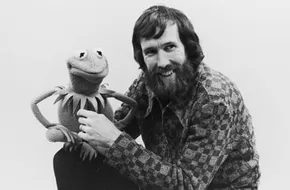
There are over 100 Muppeteers on the roster today. The Muppets have survived for half a century, outliving trends, networks, and original creators. But if you are digging into Muppet history, the conversation always loops back to two names. Jim Henson. Frank Oz.
Henson was the architect. Oz was the engine.
The Man Behind the Frog
Skip the mythology for a second. Without Jim Henson, Kermit wouldn’t exist. Neither would Rowlf, Waldorf, Dr. Teeth, Link Hogthrob, or Ernie. Henson didn’t just perform them. He wrote them. He designed them. He built them. He directed them. He produced them. He was the total package until his death in 1990.
His son Brian never took over Kermit’s voice, despite what you might have heard online. It went to Steve Whitmire, a longtime colleague. Today, the Henson family runs the Jim Henson Company, keeping the legacy intact while new puppeteers take the stage.
“When Jim took Kermit off his arm, he had no difficulty leaving him behind and going somewhere else.” — Frank Oz
Henson viewed puppets as a “means to an end.” He wasn’t obsessed with the craft of puppetry itself. He was obsessed with the story. Once the character worked, the puppet became secondary. That detachment allowed him to evolve.
The Right-Hand Man
Frank Oz started young. He was 19 when he joined Henson’s crew. The plan was simple. Henson was starting a family. He needed a replacement for his wife, Jane, who originally worked with him. Oz took over right-handing Rowlf the Dog.
That job opened the floodgates. Oz became the voice and hands behind Bert, Grover, Cookie Monster, Animal, Miss Piggy, and Fozzie Bear. He didn’t just perform. He branched into writing and directing. He also became famous globally as the voice of Yoda in Star Wars. That role alone cemented his status in pop culture, separate from the Muppets.
After three decades with the Muppets, Oz shifted focus. He directed films like Little Shop of Horrors and The Muppets Take Manhattan. He still performs occasionally, but his heart has been in directing for a long time.
The Comedy Chemistry
The magic happened when Henson and Oz shared the screen. Their characters interacted constantly. Ernie vs. Bert. A dynamic that defined early Sesame Street. Caroly Wilcox, a Muppeteer and designer, described watching Henson tease Oz as “unadulterated glee.”
Henson was blunt about it. He told people Oz was “probably the person most responsible for the Muppets being funny.” Henson could be weird. Oz could be sharp. Together, they created a rhythm that other puppeteers struggled to match.
Breaking Into the Puppeteering World
You don’t need a degree to start, though a few universities and schools do offer degrees in Puppetry Arts. You can check UNIMA-USA’s website for accredited programs. The American branch of the International Puppetry Union lists them out.
Most successful Muppeteers come from art, journalism, or theater backgrounds. But the best education is hands-on. You have to build. You have to perform. There are resources online to help.
- Puppet 101
- Project Puppet
- Muppet Central Puppetry Forum
- Puppet Planet
Start with a sock. Move to a glove. Then try a complex mechanism. The field is small. The work is hard. The audience is everywhere.