Luck got involved here.
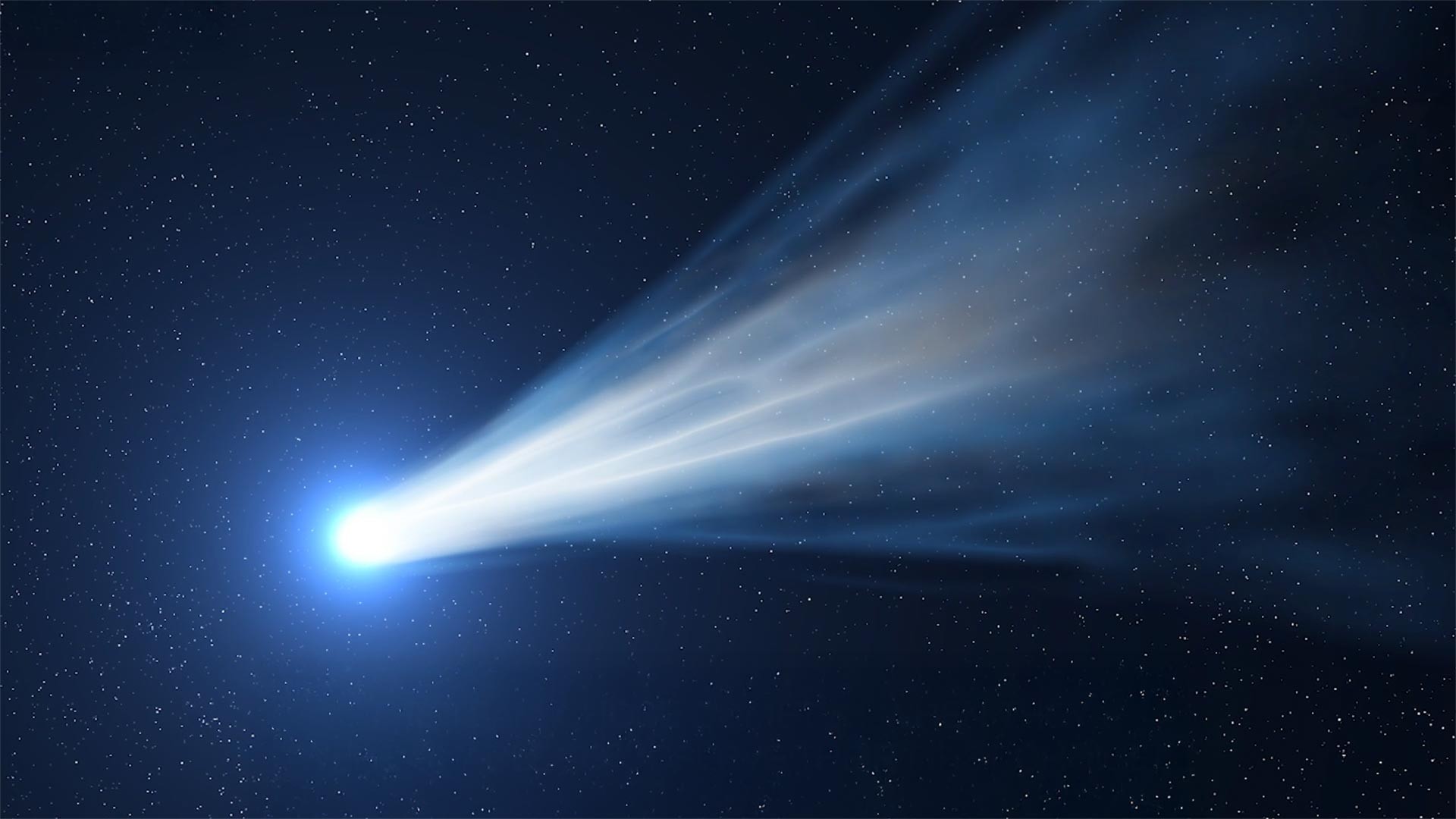
NASA’s Hubble Space Telescope caught a comet breaking apart almost in real time, an event so rare scientists barely know what to say about it. The paper detailing the find dropped in the journal Icarus recently, but the story started with a pivot. They weren’t even looking for this specific rock.
John Noonan, a co-investigator from Auburn University, called it accidental science, the kind that only happens when plans go sideways. Their original target wasn’t viewable because of some technical constraint, a boring logistical hurdle that forced them to find a new subject. They chose comet C/2025 K2 (ATLAS), careful to note it is not the interstellar visitor 3I/ATAS. Right as the camera focused on this substitute target, it fell apart. The odds are slimmest.
Noonan saw the mess the next morning.
He was checking the data and counted four comets. He had only proposed looking at one. “Something really, really special,” he noted, staring at the screen. For years, the team had chased the holy grail of comet watching, submitting proposals to catch fragmentation, missing every time due to bad timing or poor planning. Dennis Bodewits, another professor at Auburn and the lead investigator, called it ironic. They were just studying a “regular” comet when it decided to crumble.
That crumbling is the point, though. Comets are the solar system’s leftovers, icy fossils from when things were young and chaotic. They contain old stuff, primordial material. But they aren’t pristine museums. Sunlight and cosmic rays bake and irradiate the surface over billions of years, altering the chemistry. So the question always hangs there, heavy and unanswered: Is this original or is it processed? By watching the comet crack, you peel back the burned crust and see the raw ancient ice underneath.
Hubble did its job well, spotting at least four separate pieces, each wrapped in its own glowing coma, the gas and dust halo surrounding the core. Ground-based telescopes just saw faint blurry blobs, indistinguishable smears of light. Hubble saw distinct chunks.
This happened a month after K1 passed perihelion, swinging dangerously close to the Sun, inside Mercury’s orbit even. That close, the heat is unbearable, stressing the structure until it fails. Before it exploded, the comet was about five miles across, larger than average. The fracture started eight days before the snapshots on November 8-10, 202. One smaller fragment split mid-observation.
Then there’s the brightness issue. It shouldn’t make sense.
You split open a comet. You expose fresh, reflective ice. It should light up immediately, like a switch flipped. But K1 didn’t brighten right away. It waited. Why? The team doesn’t have a single answer. Maybe the surface needed time to generate a layer of dust, which sunlight actually reflects better than fresh ice, which can be dark and absorbing. Or maybe the heat trickles down slowly, building internal pressure until pop, an expanding dust cloud ejects outward.
“This is telling us something very important,” Noonan said, pointing to the delay. “We may be seeing the timescale to form that substantial dust layer.”
They haven’t seen that physics in action this clearly before, certainly not within days of the actual break-up. Usually, the pieces have drifted weeks or months before anyone notices.
The chemistry is equally weird. Ground observers found K1 has almost no carbon, strange for a relic of the early system. Hubble’s STIS and COS instruments will dig deeper into the spectra, searching for clues about where the solar system started and how those ingredients were mixed.
Right now, the debris is drifting in Pisces, roughly 250 million miles out, moving away. It won’t be coming back.
Hubble is over 30 years old, a joint effort between NASA and the European Space Agency, managed from Maryland by Goddard, supported by Lockheed Martin in Denver, with science operations in Baltimore by AURA. It keeps working, stumbling over discoveries like shattered ice in the void. The team is still crunching the gas data, waiting to see if the lack of carbon makes sense in context, or if this was an outlier that never fit the model to begin with.
DOI: 10.1088/j.icarus.2926.16