For much of human history, population growth has been viewed as a steady upward climb. However, history is punctuated by sudden, dramatic implosions. One of the most significant of these occurred roughly 5,000 years ago during the Neolithic decline, a period when established communities across Europe seemingly vanished, only to be replaced by entirely different groups.
New research involving ancient DNA analysis is finally providing a clearer picture of this upheaval, suggesting that the collapse was not caused by a single catastrophe, but rather a “perfect storm” of biological and environmental pressures.
A Genetic Divide in the Grave
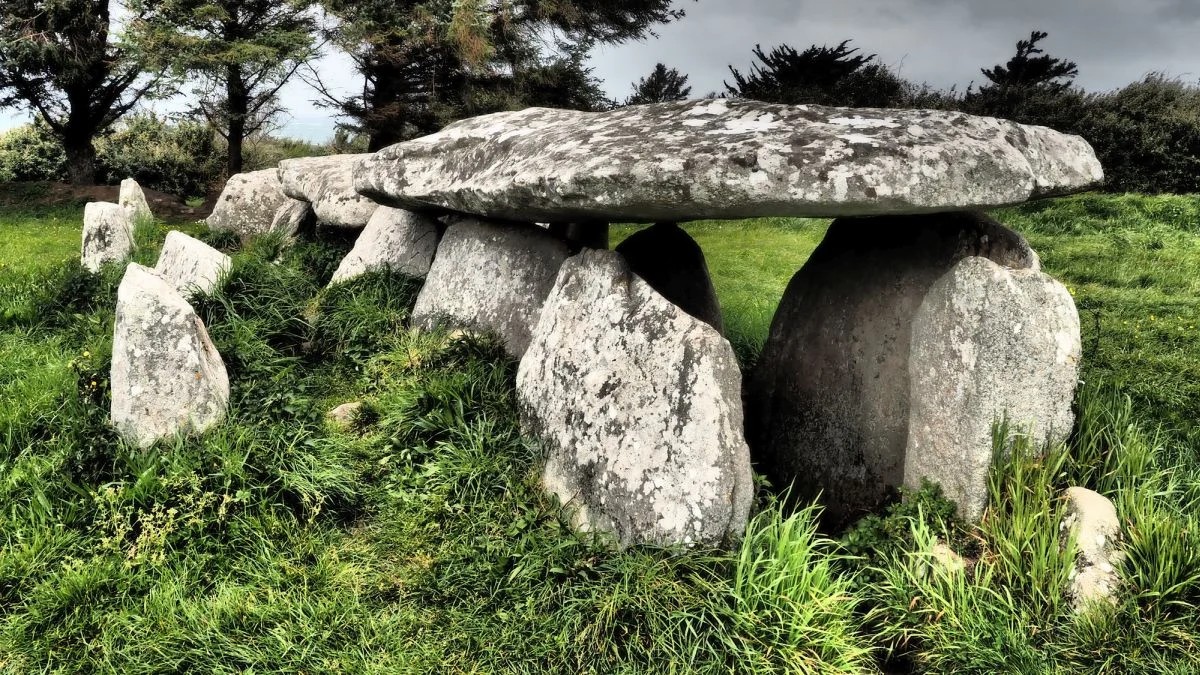
The breakthrough comes from a study led by the University of Copenhagen, which analyzed the genomes of 132 individuals buried in a megalithic “gallery grave” near Bury, France. This site serves as a historical snapshot of a massive demographic shift.
By sequencing the DNA, researchers identified a stark genetic break between two distinct burial phases:
- Phase One (c. 3200–3100 BCE): A close-knit community of highly related individuals. This group showed an unusually high mortality rate among young people—a pattern that does not align with a healthy, stable population.
- The Gap: A period of several centuries where no burials took place, coinciding with the broader Neolithic decline.
- Phase Two: A completely different population with genetic ties to southern France and Iberia, characterized by much looser familial connections.
“The people who used the tomb before and after the collapse appear to be two completely different populations,” says geneticist Frederik Seersholm. “This tells us that something significant happened… a major disruption that led to the decline of one population and the arrival of another.”
The “Perfect Storm”: Disease, Famine, and Nature
While the exact “smoking gun” remains elusive, the evidence points toward a combination of stressors rather than a single event like a lone war or a single drought.
🦠 The Role of Pathogens
The researchers detected DNA from several dangerous bacteria in the remains of the first burial phase. Most notably, they found traces of Yersinia pestis —the same bacterium responsible for the Black Death centuries later—and Borrelia recurrentis , which causes relapsing fever. While scientists debate whether the plague alone could topple a civilization, the presence of these pathogens suggests a high “disease load” that likely weakened the population.
🌲 Environmental Shifts
Supporting the theory of a human decline is environmental data from the region. During this period, forests began to reclaim farmland. In archaeological terms, widespread reforestation is a classic indicator of diminished human activity, suggesting that farming communities were either dying out or abandoning their lands.
👥 Social Fragmentation
The shift in kinship patterns is also telling. The pre-collapse community was composed of tightly-knit family units. The post-collapse population was more sparse and less closely related, indicating a fundamental change in how humans lived and organized themselves in the Paris Basin.
Why This Matters
This research moves us away from “grand narratives” of sudden, singular apocalypses and toward a more nuanced understanding of how societies fail. It suggests that the Neolithic decline was likely a compounding crisis : infectious diseases may have weakened the social fabric, while famine or conflict further destabilized the population, eventually leaving a vacuum that was filled by migrating groups from the south and the Eurasian steppe.
Conclusion
The Neolithic decline was not a single moment of destruction, but a complex period of biological and social strain that fundamentally reshaped the genetic and cultural map of Europe.