NASA’s Curiosity rover has achieved a major milestone in the search for ancient life on Mars. By analyzing a specific rock sample from the Gale Crater, scientists have detected more than 20 carbon-containing compounds, including seven molecules that have never before been identified on the Martian surface.
The “Mary Anning 3” Discovery
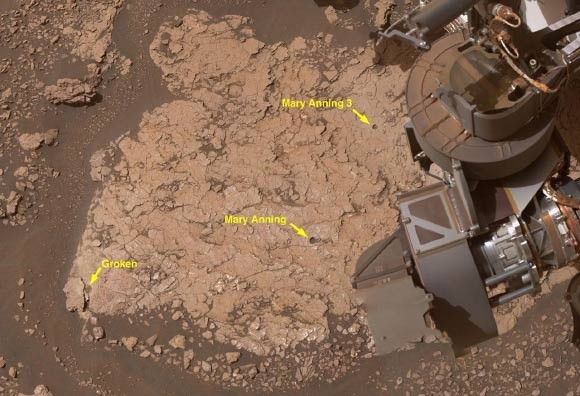
The breakthrough came from a sample nicknamed Mary Anning 3, named after the pioneering English paleontologist. The rock was collected from a section of Mount Sharp that was once part of an ancient oasis, characterized by shifting lakes and streams roughly 3.5 billion years ago.
Over eons, this environment left behind thick deposits of clay minerals. In planetary science, clay is a critical find; its structure is exceptionally efficient at trapping and preserving organic compounds, protecting them from the harsh radiation that typically destroys delicate molecules on the Martian surface.
Chemical Building Blocks for Life
Among the most significant findings is the detection of a nitrogen heterocycle —a ring of carbon atoms containing nitrogen. This discovery is scientifically profound for one primary reason: these structures are considered chemical precursors to RNA and DNA, the fundamental building blocks of genetic information on Earth.
The presence of these molecules suggests that the chemical “ingredients” necessary for life were present in Mars’ ancient environment. Other notable discoveries include:
– Benzothiophene: A molecule containing carbon and sulfur frequently found in meteorites.
– Prebiotic potential: Because benzothiophene is common in meteorites thought to have “seeded” the early Solar System with organic matter, its presence on Mars reinforces the theory that the planet was chemically primed for life.
Advanced Laboratory Techniques in Space
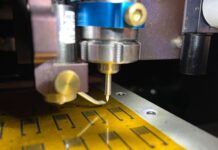
The analysis was conducted using the Sample Analysis at Mars (SAM) instrument, a sophisticated miniature laboratory housed within the rover. To unlock the secrets of the Mary Anning 3 sample, NASA scientists employed a high-stakes “wet chemistry” technique:
- Pulverization: A robotic drill turns the rock into a fine powder.
- Thermal Analysis: A high-temperature oven heats the powder to release gases for analysis.
- TMAH Solvent Treatment: For the first time, Curiosity used a powerful chemical solution called tetramethylammonium hydroxide (TMAH) on a Martian sample. This solvent is used sparingly because it is reserved for the highest-value targets.
To ensure the results were accurate, researchers cross-referenced the process with the Murchison meteorite —a famous Earth-based sample of ancient space rock. The fact that the TMAH treatment produced similar results in both the meteorite and the Martian sample confirms that the rover is successfully breaking down complex, potentially life-related organic matter.
The Big Picture: Life or Chemistry?
While the discovery is a massive leap forward, scientists remain cautious about the origin of these molecules. The data does not yet reveal whether these organics were:
– Biotic: Produced by ancient living organisms.
– Abiotic: Created through non-living geological processes, such as water interacting with rocks (serpentinization) or electrochemical reactions.
Despite this uncertainty, the sheer diversity of the molecules found proves that Mars has maintained a complex chemical library for over 3.5 billion years, surviving intense radiation and geological shifts.
“This collection of organic molecules once again increases the prospect that Mars offered a home for life in the ancient past.” — Dr. Ashwin Vasavada, NASA Jet Propulsion Laboratory
Conclusion
The detection of diverse, nitrogen-bearing organic molecules confirms that ancient Mars possessed the complex chemical environment required to support life. While the source of these molecules remains unconfirmed, this discovery provides a roadmap for future missions to hunt for definitive biological signatures.