The annual Lyrid meteor shower is making its seasonal return, offering stargazers a chance to witness bright, fast-moving streaks of light across the night sky. While the shower has been active since April 16, the most spectacular displays are expected to occur during the late evening of Wednesday, April 22, and the early hours of Thursday, April 23.
How to Watch the Show
To catch the best part of the event, timing and preparation are key. Here is how to maximize your viewing experience:
- Peak Timing: The highest frequency of meteors is expected after midnight.
- Visual Adaptation: It takes roughly 20 to 30 minutes for human eyes to fully adjust to the dark. Avoid looking at bright smartphone screens during this time, as light pollution from your own devices can ruin your night vision.
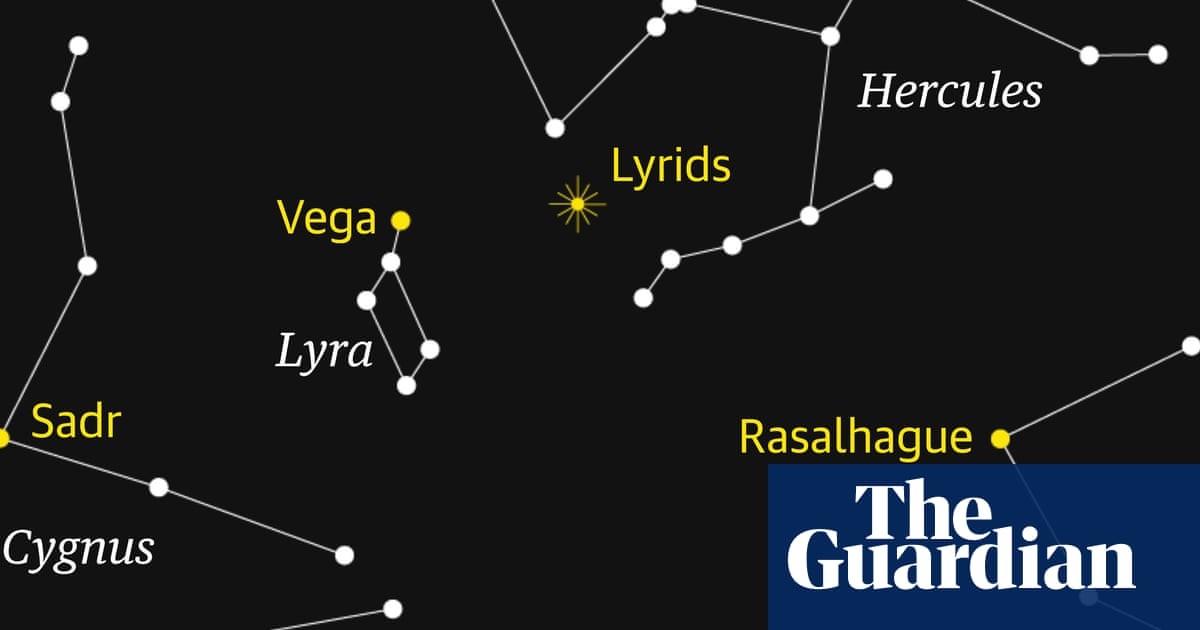
- The “Radiant” Point: While meteors will appear to fan out across the entire sky, they will seem to originate from a single point known as the radiant. This point is located within the constellation Lyra (the Lyre), near the brilliant star Vega.
- Expected Rate: Observers can expect to see a maximum of approximately 18 meteors per hour.
What Are the Lyrids?
The Lyrid meteor shower is not a new phenomenon; it is one of the oldest recorded celestial events, with observations dating back to 687 BC.
These meteors are the result of Earth passing through a trail of debris left behind by Comet Thatcher, which was first discovered in 1861. As these tiny fragments of comet dust enter Earth’s atmosphere at high speeds, they burn up, creating the bright flashes of light we see from the ground. Many of these meteors are particularly striking because they move rapidly and can leave behind “smokey trains”—persistent glowing trails of ionized gas—that linger in the sky for several seconds.
Viewing Limitations
While the shower is a treat for observers in the Northern Hemisphere, those in the Southern Hemisphere may find it difficult to enjoy. Because the radiant point sits low in the northern sky, the meteors will be much harder to spot from southern latitudes.
Summary: The Lyrids offer a historic and visually striking celestial event, peaking on the night of April 22, provided observers have dark skies and patient eyes.