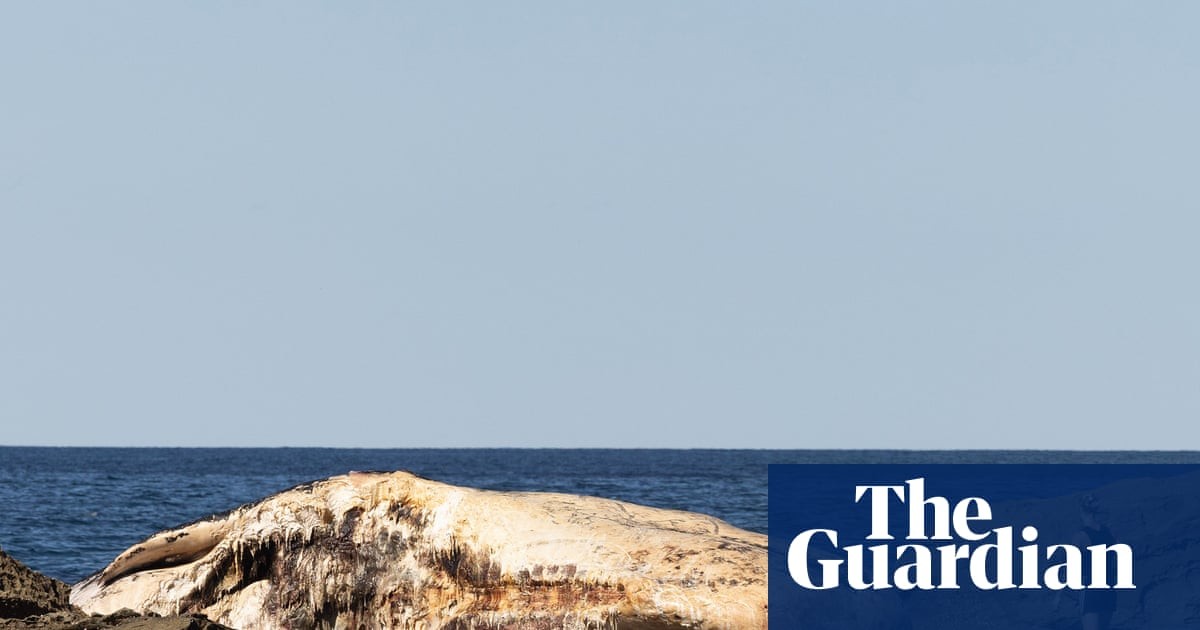
A massive, 25-tonne sperm whale carcass has washed ashore on the rugged rocks of Era Beach in Sydney’s Royal National Park, transforming an idyllic coastal landscape into a site of morbid fascination and significant public safety concerns.
The presence of the decomposing giant has triggered a series of beach closures and sparked a logistical debate over how to manage a carcass of such immense scale in a difficult-to-access location.
A Biological and Sensory Landmark
The carcass, which appears to have lost its lower half to scavengers or ocean currents, lies partially disintegrated on a rock shelf. Observers describe a visceral scene: strips of flesh swaying in the wind, glistening fluids, and a pungent, “sour-sweet” odor of decay that can be detected even from a distance.
While the sight draws crowds of curious hikers, drone operators, and even helicopters, it also serves as a grim biological marker. For centuries, seabirds have signaled the proximity of land to sailors; today, the circling sea eagles and the overwhelming scent of the whale serve as a different, more visceral beacon for those traversing the park.
The Shark Threat and Beach Closures
The most immediate consequence of the whale’s presence is the heightened risk to human life. The decomposing remains have acted as a massive feeding station for marine predators.
- Shark Sightings: Following a sighting at Era beach on Saturday, authorities confirmed shark activity in the area.
- Widespread Closures: As of mid-week, all beaches within the Royal National Park—including Garie, North Era, South Era, Wattamolla, and Burning Palms—remain closed to the public.
- Official Warnings: The New South Wales National Parks and Wildlife Service (NPWS) has issued an “elevated shark risk” alert, noting that the carcass provides a constant draw for sharks to the coastline.
The Logistical Nightmare of Removal
Removing a 25-tonne carcass from a remote, rocky shoreline is a monumental task. Dr. Vanessa Pirotta, a Sydney-based whale scientist, notes that while decomposing carcasses play a vital ecological role by feeding sharks, they pose a direct hazard to human recreation.
The difficulty in removal stems from two main factors:
1. Inaccessibility: The site can only be reached via a 45-minute trek through steep, scrubby terrain or by water, making it nearly impossible to move heavy machinery to the site.
2. Environmental Variables: Tides and the sheer weight of the animal dictate the window of opportunity for any cleanup operation.
Potential Disposal Methods
Authorities are currently weighing several options, each with its own set of challenges:
– Heavy Machinery: Transporting the remains inland via specialized equipment.
– Offshore Disposal: Towing the carcass far out to sea (though this carries the risk of the body drifting back to shore).
– Rendering: A method used in the UK where remains are processed into biodiesel, though this requires significant infrastructure.
“The longer a dead whale remains in the area, the increased potential for sharks to remain,” warns Dr. Pirotta.
The Mystery of the Death
Because the whale is in an advanced state of decomposition, determining the exact cause of death is unlikely. Experts suggest the animal likely died at sea weeks ago, with its lower half lost to the ocean before the remains eventually washed ashore. While mass strandings are a known global phenomenon, this particular case appears to be an isolated event of a creature that succumbed to natural causes or injury far from the coast.
Conclusion
As authorities finalize a removal plan, the Era beach community remains in a state of uneasy coexistence with the carcass. The situation highlights the complex intersection of marine ecology, public safety, and the daunting logistical realities of managing large-scale natural events in protected wilderness areas.