When the hero dies, does the story stay green?
Wind farms are aging.
Across Ireland, thousands of tonnes of turbine blades are reaching the end of the road by 2030. So far? They rot in landfills. They burn in incinerators. Not very “sustainable” if you ask me.
The island’s first commercial wind farm, Bellacorrick in County Mayo, shut down early this year.
Two Northern Irish firms decided to intervene. They aren’t letting those blades disappear into quarries quietly.
Look at the numbers. Over the next fifteen years, Northern Ireland will replace more than 400 of these giants. That’s a lot of non-recyclable plastic heading toward the fire or the grave.
But wait.
Scientists have been trying to fix this. Queen’s University Belfast proved blades could be safe enough to build bridges. Street furniture. Solid stuff.
Then there is Plaswire in Lurgan.
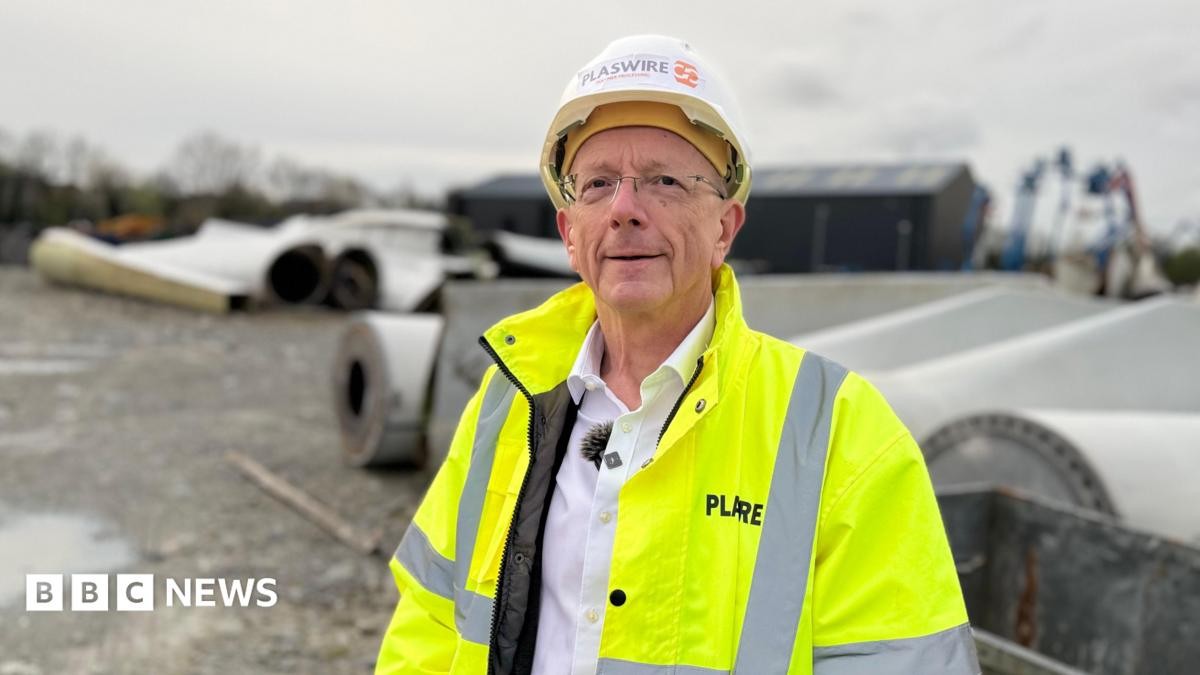
The yard looks like an industrial graveyard waiting for a second life. Chief Executive Andrew Billingsley sees the scale of the problem. It is, as he puts it, “colossal.”
“At present, there’s somewhere in region of 125000 tonnes of blades getting disposed of… but very rarely is it sustainable.”
Plaswire shreds the blades. Recasts them. Turns them into material stronger than wood, cheaper than precast concrete. Fence posts. Transport pallets.
Why does this matter?
Plastics are dirty. Making a tonne of virgin plastic costs about three tonnes of CO2. Burning plastic releases another 2.7 to 2.9 tonnes. By reusing the material, we dodge both the manufacturing emissions and the incineration smoke. It’s a double save.
But can we prove it?
Kieran Kelly of ubloquity thinks technology is the answer.
He attaches QR codes or RFID chips to the recycled product. Your phone scans it. The product talks.
“Tell you the story through a mobile device… who made it… what production line… what it is.”
A voice for the material. Transparency for the global stage.
Think back to Bellacorrick in 1992. Cutting edge then. Twenty-one turbines. Six point five megawatts. Enough power for 4,500 homes. They expected a twenty-five year lifespan. They lasted longer. The blades? Forty-six to fifty-three metres long. Tiny now.
Modern blades stretch two hundred metres.
Fewer turbines. More power.
The site won’t stay quiet though. Eighteen new beasts will replace the original twenty-one. Each single turbine now outproduces the entire old farm.
They’re merging with the Oweninny wind farm next door. Sixty turbines already power 140,00 homes there.
Add the new ones?
Capacity jumps to 220. The old blades are gone, repurposed or rotting. The new ones spin. The lights stay on.
What happens when these ones get too old?
The industry hasn’t decided yet.