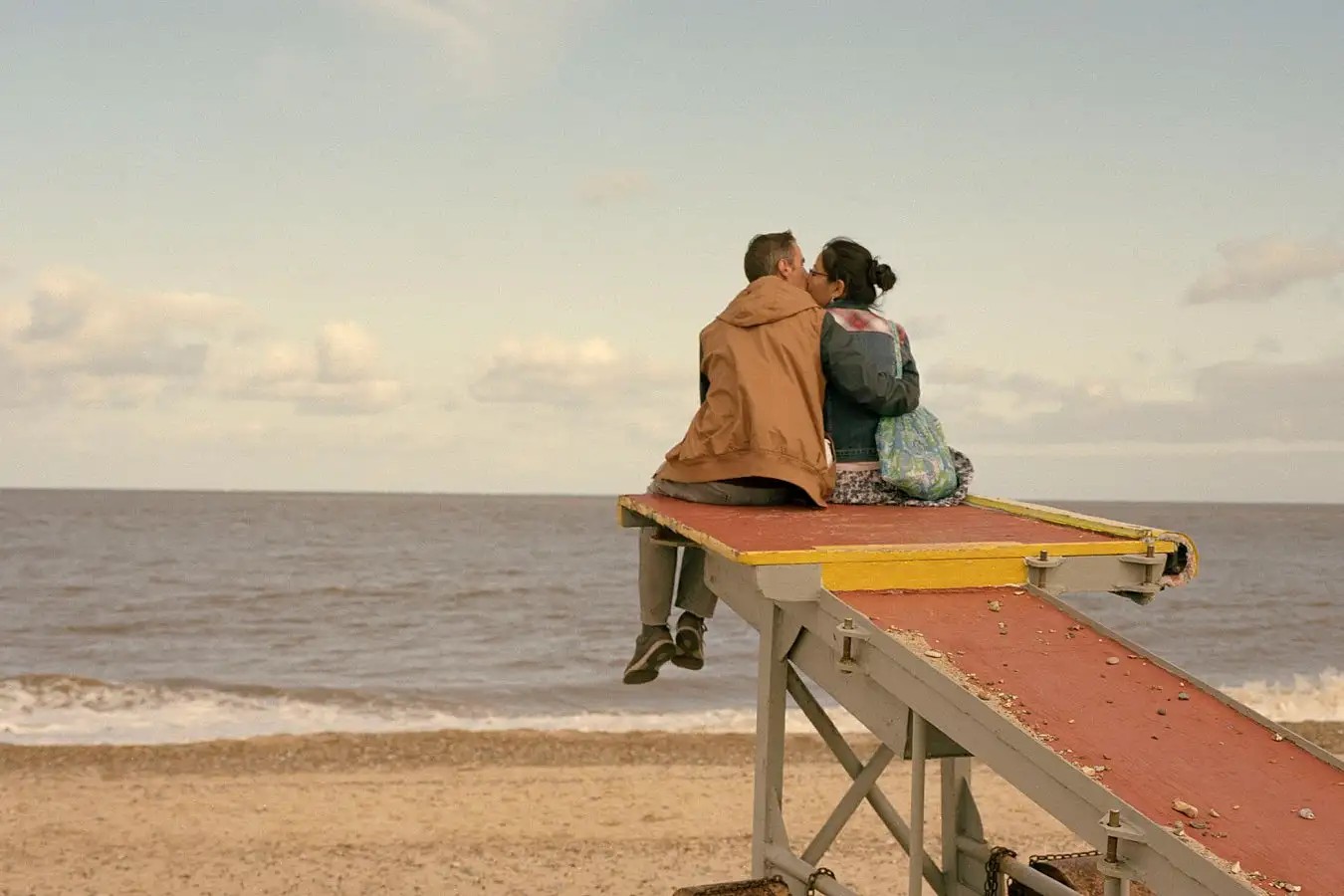
A couple leans in. A kiss pending in a lobby. I’m elsewhere though. Beelining for a soft-lit room in Edinburgh that smells like coffee and nervous first-date energy. The Royal Society called the meeting “Love, Actually and in Theory.”
I wanted one thing. An answer to the big one: what is love?
Over forty-eight hours, evolutionary biologists, neuroscientists, psychologists, all of them tried. They focused mostly on romance, naturally. This was the first time so many top names sat in one room for love. Adam Bode from the University of Melbourne was actually crying mid-conference. He’s emotional about it. Maybe rightly so.
“This is a big deal,” Bode said, eyes welling up.
Love science has always been treated as a joke. Or worse, invisible. Bode calls it a “soft” science. Underfunded. Ignored. There’s a lingering impression that studying hearts isn’t serious work. Now though, the oldest scientific institution in the globe is putting up money for this. Suddenly it counts. Or it starts to.
Defining it is harder than finding it. Marta Kowal from the University of Wrocław said scholars can’t even agree on the basics. Yet. Some folks see it as just another emotion. Like joy. Or sadness. It feels subjective. It isn’t rational.
“I got interested in love,” Bode explained, “because I fell for someone I didn’t want to.”
Makes sense. Why fight it when you can study it? But most here disagree that it’s just a feeling. They think it’s a drive. A motivational state. It pushes us to stay close. To reproduce. To keep the species going.
Brain scans back this up. Lucy Brown from the Albert Einstein College of Medicine showed the data. Love lights up the brainstem. Same pathways for hunger and thirst. It’s not a mood swing. It’s a survival system.
It’s part of our survival system.
Robert Sternberg from Cornell prefers a different angle. A triad, really. Intimacy, passion, commitment. Three pillars holding up the roof. Intimacy is emotional closeness. Passion is physical pull. Commitment is the stubborn choice to stay.
Sternberg borrowed the model from his own life.
He had intimacy with Mary. Passion with Julia. “I couldn’t keep my eyes off her.” Then he had commitment with Ellen. He split his heart into three lessons. It worked for him.
Researchers do agree on one thing. It changes. The honeymoon phase hits hard. Intense desire lasts one or two years max. Then companionate love takes over. Pragmatic. Less poetic. Kowal called it a continuum though, not a hard break. You can slide back and forth.
Newly in love? Obsessive. Bode notes they think about their partner for half their waking hours. Distracted. Dangerous, arguably. “I don’t think new lovers should be allowed to drive,” he joked. He’s actually writing a grant for this.
The meeting ended with plans to publish multiple definitions in a paper soon. A catalog of meanings. I’m sure it won’t solve the riddle. But love is why many of us bother living, so maybe the attempt matters more than the answer.