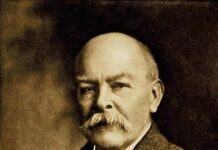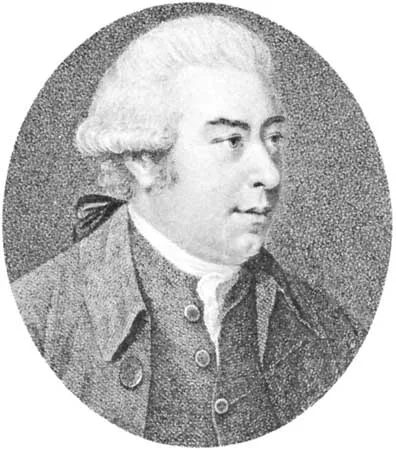
Joseph Banks didn’t just observe nature. He controlled it.
Born in London in 1743, he inherited a huge fortune that gave him the freedom to pursue science without financial worries. In his twenties, he had already visited Newfoundland and Labrador and collected plants and specimens. It was just an appetizer.
He is best known for his three-year voyage around the world with Captain James Cook from 1768 to 1771. The trip took them to the Pacific Ocean, New Zealand and Australia. Banks collected thousands of plant and natural history specimens. In 1772 he also traveled to Iceland. His collections weren’t just for show. He was obsessed with economic plants. He wanted to know what crops could be brought to new lands to promote trade and agriculture.
His influence grew with his title. In 1778 he became president of the Royal Society. He held the position for forty-two years. That’s a long time to hold power in an organization. He improved the status of science in Britain. He promoted exchanges with researchers from other countries. But his leadership style was not gentle. Many scholars accused him of excessive authority. They called him “despotic.” He ran the Royal Society with an iron fist. He was created a baronet in 1781. In 1795 he was made a Commander of the Order of the Bath. Two years later he joined the Privy Council.
Banks was also a serious researcher, although his political activities often overshadowed his scientific contributions. He was the first to point out that wheat rust fungus and barberry fungus are one and the same organism. This realization came in 1805. It was a significant step in the understanding of plant pathology. He also argued that marsupial mammals were more primitive than placental mammals. He was the first to show this difference.
As honorary director of the Royal Botanic Gardens at Kew, near London, he expanded the garden’s reach. He sent plant collectors to different countries. His home became a center for the exchange of ideas. Scientists flocked to his house. They discussed and exchanged views. The environment was intense.
His legacy is both physical and institutional. His herbarium is considered one of the most important. His library, an important collection of natural history works, is now in the British Museum. Banks’ Florilegium, a collection of botanical engravings, is another important part of his archive. It was compiled by Banks and was based on drawings by the Swedish botanist Daniel Solander. These drawings were created during Cook’s voyage in 1768–1771. The book was not fully published until 1989. The delay refers to the sheer scale of his collection. It took more than two centuries before he was able to fully present what he had collected.
Banks died in Isleworth, London in 1820. He left behind a changed scientific landscape. The Royal Society was stronger. Kew Gardens was globally connected. The question remains whether his despotism was necessary to achieve these results. The archive suggests so. The large number of specimens speaks for itself. Under his watch, science progressed, whether the community liked it or not.