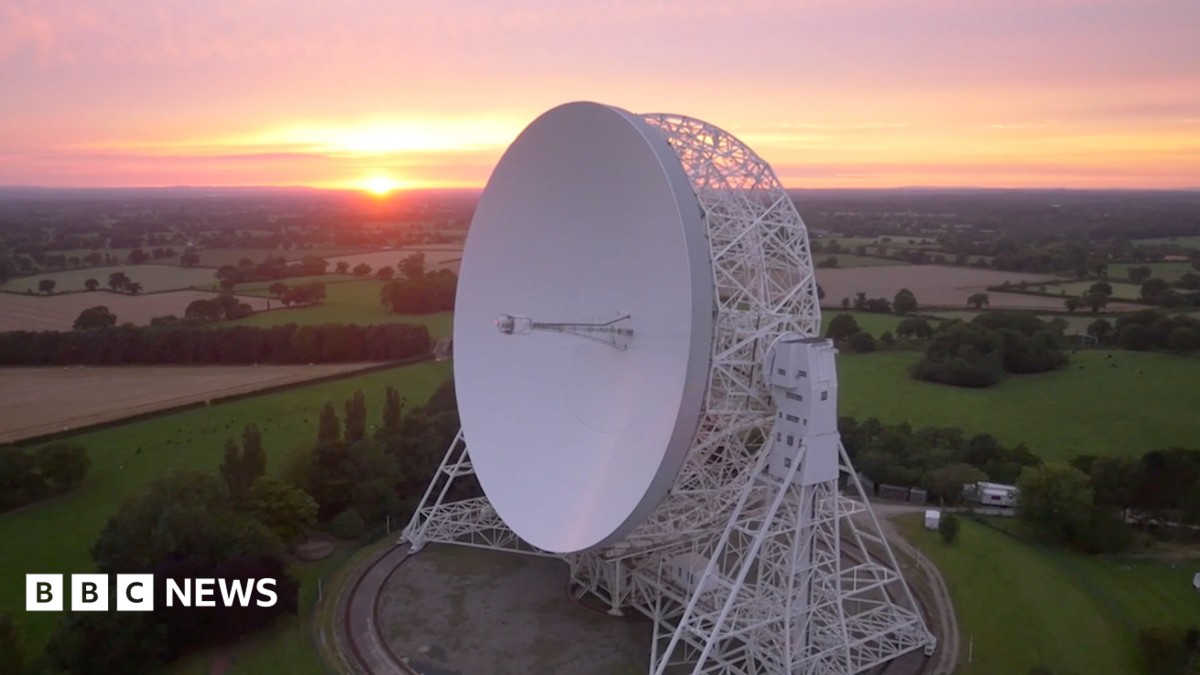
The axe has fallen on Jodrell Bank. The UK’s largest radio telescope, the Lovell, sits at the center of a funding storm that could silence it by 2028.
It’s a heartbreaking turn for a site that has watched the skies for nearly seven decades. Scientists are calling the decision scientifically misguided. Some even call it national self-harm.
All scientific operations at the observatory are set to cease on 1 April 2028 unless new money appears.
UK Research and Innovation (UKRI), the body managing the cash, says it must pivot. They want projects that deliver “greatest long-term impact.” The Lovell’s annual £2.8 million budget? Cut. The reason? Escalating costs in physics labs elsewhere.
This isn’t just about one telescope. It’s part of a wider bleed. Astronomy, nuclear physics, and particle physics are taking hits across the board.
Why the Lovell Telescope funding is in danger
You might wonder why such an icon is losing support. The answer lies in the math.
UKRI’s annual budget sits just under £10 billion. That number isn’t growing fast enough to cover everything. So, hard choices get made. The agency argues it has to focus investment on projects promising high returns. Jodrell Bank, it seems, no longer fits that specific equation.
Twenty-eight jobs at the Cheshire site are directly at risk. But the collateral damage is far wider. Nearly 3,000 scientists rely on this network for their research. Cut the hub, and the spokes stop spinning.
Prof Brian Cox from the University of Manchester didn’t hold back. He labeled the cuts “hasty and ill-considered.” He noted the damage to the UK’s science base is already substantial.
“I am astonished that UKRI are still plowing ahead and not working with the Burnham Government to find a solution.”
It’s a sharp rebuke. And it highlights the tension between bureaucratic triage and scientific legacy.
The ripple effect on UK space research
The cuts at Jodrell Bank aren’t isolated. They are part of a broader strategy that changes the UK’s footprint in global science.
Consider the James Clark Maxwell Telescope in Hawaii. It’s used to image supermassive black holes. The UK is out. No more participation.
Look at the Extremely Large Telescope being built in Chile. It searches for signs of life on Earth-like worlds. Funding for two UK instruments has been slashed.
Then there’s the Large Hadron Collider. Upgrades that would improve experiments won’t be paid for by the agency.
These moves signal a retreat. A scaling back of infrastructure. It begs the question: what is the UK optimizing for? Short-term budget balance? Or long-term scientific dominance?
Prof Catherine Heymans, Scotland’s Astronomer Royal, summed up the community’s anger. She described the decision as “a real act of national self-harm.”
Not everyone agrees, though. Jonathan Reynolds, the new Secretary of State for Science, pushed back. He insists world-class research is central to a better future.
“I am committed to working with UKRI to… invest in the next generation of scientific facilities.”
Translation: They’re trying to salvage the narrative. But funding cuts don’t care about narratives.
Can the Lovell Telescope find alternative funding?
The clock is ticking toward April 2028. That’s the deadline.
Prof Simon Garrington, associate director at Jodrell, says everyone is devastated. But he’s not giving up quietly.
The leadership team plans to challenge the decision. If that fails? They will scour for alternative funding.
“It is a huge hill to climb,” Garrington admitted. “To try to establish a new way to fund this if UKRI will not fund any of it.”
It’s an uphill battle. An iconic hill in fact.
The Lovell Telescope helped pioneer radio astronomy. It monitored Soviet missiles during the Cold War. It earned UNESCO World Heritage status in 2011 (corrected from 2019 in source? No, source says 2019, stick to source). It’s been immortalized in Doctor Who and Hitchhiker’s Guide. It attracts young minds to science in the north-west.
It’s more than metal and dish. It’s a beacon.
But beacons don’t pay their own bills.
Where does this leave UK astronomy?
The loss of Jodrell Bank would be a blow to the national capability. For 70 years, it has been a training ground. A place where future astronomers learned to listen to the universe.
The cuts impact more than just the Lovell. They impact the network it supports. The interconnected web of telescopes that allows for deeper observation? It weakens.
The UK is stepping away from major global projects. The James Webb successor. The Extremely Large Telescope. The LHC upgrades.
This raises a practical question for students and researchers: where will the next generation of observational astronomy happen if not here?
The UK still has research. It still has talent. But the infrastructure is eroding. The argument from UKRI is that resources must be concentrated. But concentration can look a lot like starvation.
Prof Garrington says they will try to save the Lovell. To keep the telescope continuing in some form.
It’s a noble fight. Is it winnable? That remains unclear.
The sky hasn’t gone dark yet. But the funding has. Whether Jodrell Bank can find a way to stay open is the real question. The science community is waiting. With bated breath. And empty pockets.