As global coral reefs face an existential crisis driven by climate change and ocean acidification, a different kind of threat is emerging: invasive species. While native reefs are struggling to survive, aggressive “intruder” corals are rapidly colonizing biodiversity hotspots, fundamentally altering marine ecosystems.
New research suggests that a surprisingly simple tool—underwater air guns —could provide a highly effective way to combat these invaders without inadvertently helping them spread.
The Threat of the “Aggressive” Sun Coral
The primary culprit in this study is the sun coral (Tubastraea ). Since arriving in Brazil in the 1980s, these corals have demonstrated an alarming ability to dominate new environments.
The sun coral is particularly dangerous due to its reproductive efficiency:
– Rapid Propagation: A single tiny fragment can grow into a full, new colony.
– Ecosystem Displacement: As they spread, they push out native species and change the habitat, making it more hospitable for other invasive organisms.
– Resilience: They can thrive in areas where native corals are dying, effectively “squatting” in precious ecological niches.
The Problem with Traditional Removal
Until now, the standard method for removing invasive corals has been pneumatic hammering. While effective at breaking up colonies, this method has a major flaw: the physical impact often shatters the coral into the very tiny fragments that allow it to reproduce. Instead of solving the problem, traditional hammering can accidentally act as a dispersal mechanism, helping the invasive species colonize new areas.
A Precision Solution: The Air Gun Method
To solve this, biologist Guilherme Pereira-Filho and his team developed a method inspired by laboratory techniques used to separate coral tissue from its skeleton.
The Process:
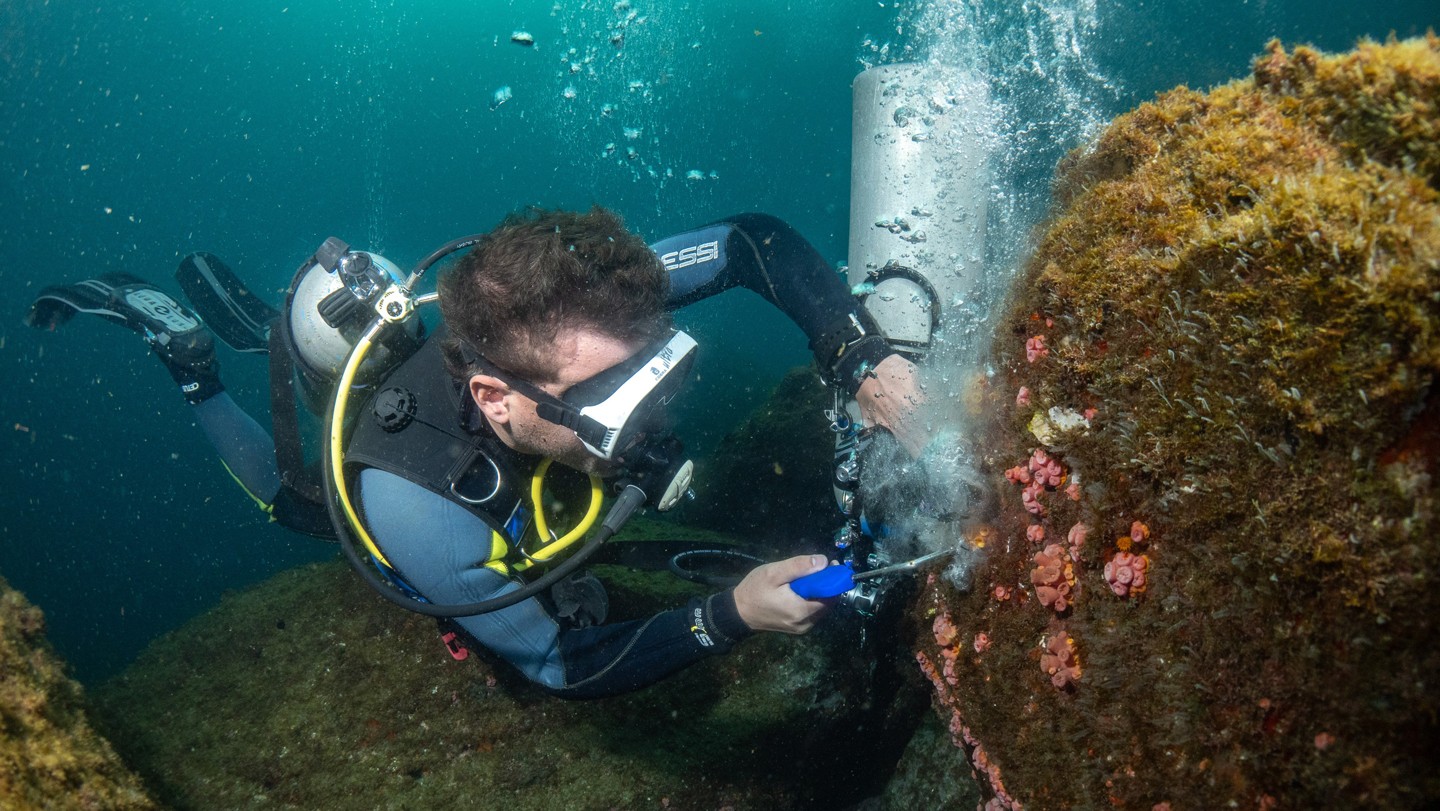
Researchers connected an air gun to a standard scuba diving regulator. During field tests at Brazil’s Alcatrazes Archipelago Wildlife Refuge, divers used these guns to blast 48 sun coral colonies. The study compared these treated colonies against 14 untouched control colonies over a period of 180 days.
The Results:
– Effective Destruction: The air blasts mostly obliterated the targeted colonies.
– No Regeneration: A major concern was whether the coral tissue could regenerate without its skeleton. However, samples collected during the blasting process failed to regrow in laboratory settings.
– Minimal Spread: Unlike hammering, the air gun method did not result in a “soup of tissue” that could settle and restart colonies, addressing a key concern held by marine ecologists.
Looking Ahead: Scaling Up the Defense
While the initial study was small-scale, the implications for marine management are significant. The researchers are now looking toward two major expansion goals:
- Large-Scale Application: Moving from single dive spots to managing entire islands.
- Industrial Use: Developing heavy-duty equipment to clean human-made structures, such as ship hulls, which act as primary transport vectors for invasive species moving across oceans.
“It’s quite a simple method that can bring a lot of benefits for the management of this invasive species,” says Pereira-Filho.
Conclusion
By utilizing compressed air to neutralize invasive corals, scientists have found a way to remove threats without triggering further spread. This method offers a vital tool in preserving the delicate balance of our oceans and protecting native biodiversity from aggressive invaders.