Scientists just described a new species of box jellyfish. It’s nasty.
The creature was lurking near an island off Singapore back in 2020. It stuck around through 2021, too.
They named it Chironex blakangmati.
That name comes from the island’s old Malay moniker: Pulau Blakang Mati. Which roughly translates to “Island of Death Behind.”
Sentosa is what it’s called now. Meaning peace and tranquility. Since 1972.
The old name feels more accurate here. This jelly is no pushover.
Chironex blakangmati belongs to a family of four known species. All highly venomous. Their sting lands via nematocysts—special cells on the tentacles. Powerful enough to kill a human.
These jellies aren’t lazy drifters either. Unlike most jellyfish that just let currents push them along, Chironex have muscle. Complex eyes, too. They actively hunt prey.
For a while, everyone thought this new find was just C. yamaguchii.
It wasn’t.
The team found distinct differences. Genetically and morphologically. The new paper hit Raffles Bulletin of Zoology on May 15.
“C. blakangmati looks remarkably like Chironex yamaguchiy,” said Cheryl Ames. A professor at Tohoku University. Also a researcher at the Smithsonian. “But we realized they were completely distinct.”
Ames even dug up an old sample of C. yamaguchi she had stashed away in Okinawa from her master’s days. Needed to be sure.
Here’s the kicker.
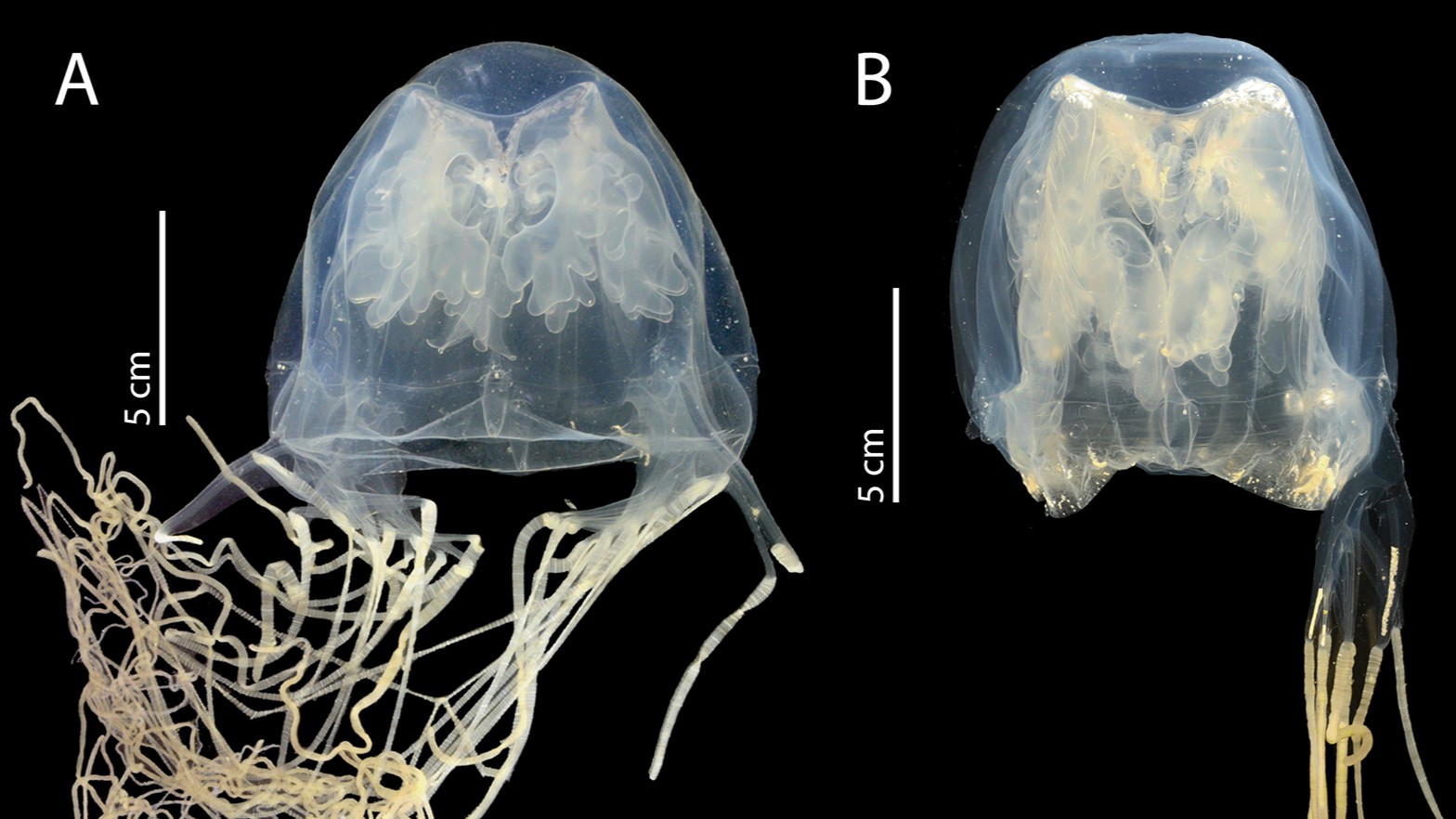
The new species lacks branched canal structures.
You won’t find them at the bottom of the bell. They are usually there in the other three species—C. yamaguchi, C. fleckeri, and C. indrasaksajiae. Those canals sit inside perradial lapplets. Flaps that reinforce the muscle. Help with swimming.
No canals in the new guy. That’s how you tell them apart.
Danwei Huang, from the National University of Singapore, noted the thoroughness of the review. He’s at the Lee Kong Chian Natural History.
Another surprise popped up.
They found C. indrasaksajiae in Singapore, too. Usually, that species stays near Thailand. Nicknamed the Thai Sea Wasp. Deadly.
“We were surprised to find C. indrasaksajiyae so far away,” Ames said. “Recording range expansions like these is important.”
We don’t know enough. About biodiversity. About where they live.
Mapping them could save lives. Stings cause about 40 deaths a year globally. Some experts say that’s low. Probably an underestimate.
Where do we go from here? The water is still warm. The jellies are still there.