Antarctica’s “doomsday glacier” is about to lose another limb.
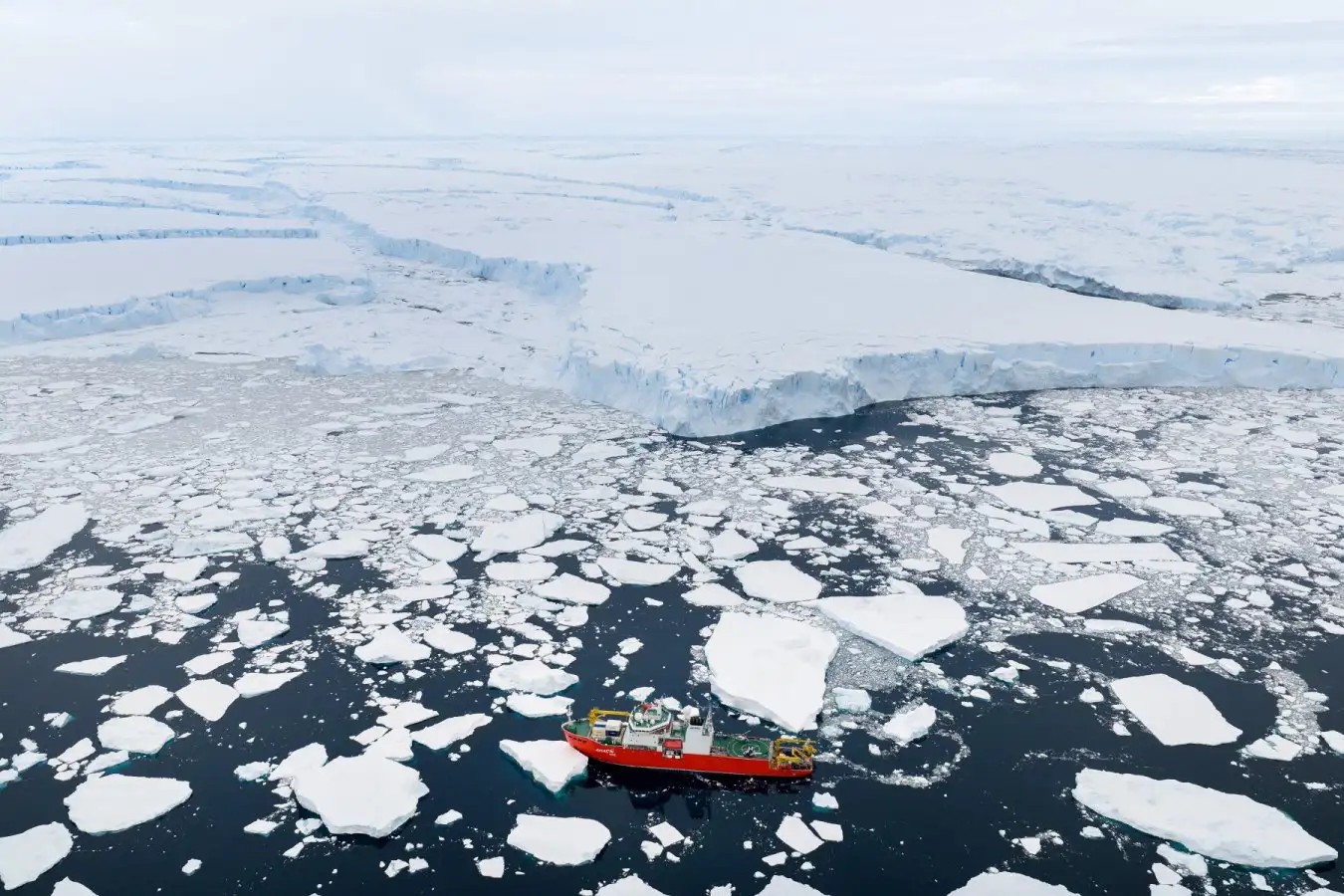
The floating ice shelf in front of the Thwaites glacier. The one known as the Thwaites Eastern Ice Shelf. It’s detaching. And with it, the brakes on one of the world’s fastest-melting glaciers are slipping further.
“Its final demise could happen suddeny,” says Rob Larter from the British Antarctic Survey. He’s prepared for it. So much so that the British Antarctic Survey already has a press release drafted. An “obituary.” Ready to go if they get caught off guard.
Thwaites isn’t just a glacier. It’s roughly the size of the UK. It’s currently responsible for four percent of all global sea level rise. But that number? It’s tiny compared to what’s coming.
If Thwaites fully collapses, it triggers a domino effect across the West Antarctic Ice Sheet. Three meters of sea level rise. Coasts redrawn. Entire cities submerged. Not maybe. Eventually.
The shelf in question, TEIS, covers about 1,500 square kilometers. That’s bigger than London. It’s 350 meters thick. Or it was. Satellite images show it fracturing. Cracks opening wide.
Christian Wild, a researcher at the University of Innsbruck, looks at the data. He sees a windscreen shattering. Large chunks just falling away.
Free newsletter? Sure, sign up later. For now, look at the fractures.
Huge gashes are opening around the “pinning point.” That’s the ridge on the ocean floor keeping the shelf held in place. Also along the “grounding line.” Where the glacier actually touches the sea and starts to float.
Karen Alley, at the University of Manitoba, was there recently. She doesn’t even recognize the ice anymore. In 2020, the shelf was thick. Strong. Now? It’s thin. Weak. It’s being slammed against that pinning point, tearing itself apart.
It’s gone from a stabilising anchor to something splitting right where it used to hold steady.
The speed is the real kicker.
The ice flow has tripled since January 2020. We are looking at over 2,000 meters per year. Wild calls it nuts. In the last five months alone? It accelerated more. It is in free fall.
New rifts are popping up along the grounding line too. Ted Scambos, at CU Boulder, says these appeared as the shelf accelerated. The ice shelf is ripping away from the glacier proper.
When will it break completely?
Larter says trying to predict ice shelf collapse is like trying to predict earthquakes. You know something is coming. You just don’t know when. One day it looks intact. The next, the next satellite image shows a mess. Or maybe not. Maybe we’ll still be watching it crack another year from now.
Don’t expect a Titanic -style iceberg drifting away. The geography won’t let it. The detached ice will likely stay stuck nearby. TEIS isn’t breaking off in one giant slab anyway. It’s already fractured.
Here is the thing everyone gets wrong.
Big icebergs make for great headlines. They don’t raise sea levels. Water displacement is basic physics. What matters is buttressing.
The shelf acts as a dam. A brake. When the shelf holds, the glacier moves slow. When the shelf fails? The glacier speeds up.
Wild and his team show that between 2020 and now, the ice flow behind this failing shelf has increased by 33 percent. The buttressing is gone. By this metric? The shelf has already failed.
So what happens next?
More ice leaves Antarctica. More water ends up in the ocean. Scambos insists this isn’t an immediate crisis. It’s slower than a movie disaster. Decades, not days. But it changes the trajectory. Thwaites moves faster toward contributing 10 or even 20 percent to sea level rise.
By 2067? Daniel Goldberg, from the University of Edinburgh, estimates Thwaites will shed 190 gig tonnes of ice a year. That’s a 30 percent increase from today. It matches the total ice loss from all of Antarctica right now.
Since the 90s, Alley notes, ice shelves have been destabilizing. Pine Island glacier next door? It’s happening there too.
Ice shelves only stay stable in the cold. Both the ocean and the atmosphere need to be cold.
We are warming the planet. The ocean is warm. The air is warm.
We are losing the ice shelves. Exactly as expected.
Just… faster than anyone hoped.