Heat in South Carolina.
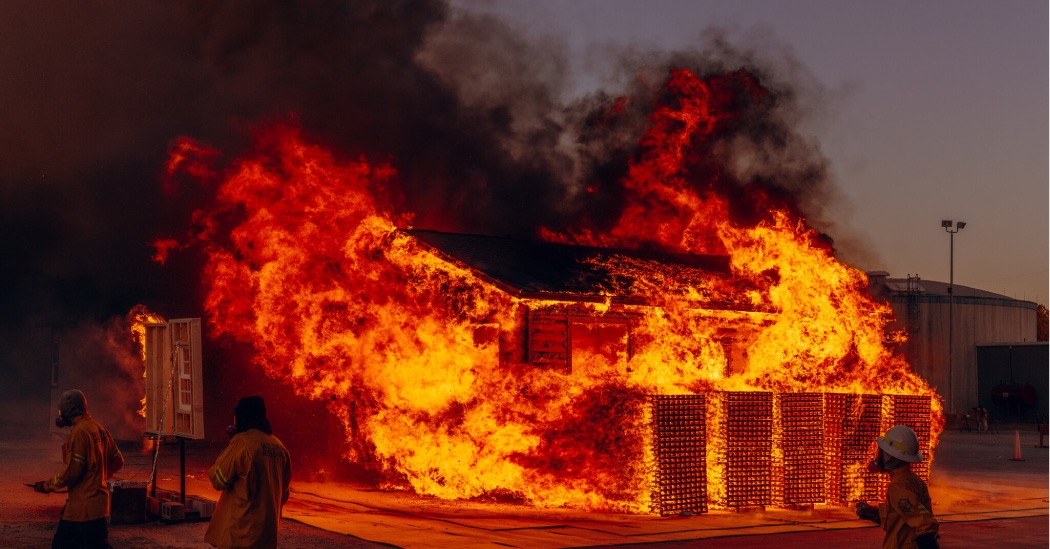
The “Burn Boss” checks the torch.
Radio clicks.
Three.
Two.
One.
Fire.
He ignites the wooden siding and watches it catch. The flames eat into the structure within seconds. They hit the sofa. The bed. The closet full of cotton clothes. Even the kitchen stocked with oil and potato chips serves as kindling. Heat blasts out through shattered glass, pushing spectators backward.
It’s a controlled burn. A test.
A nonprofit called IBHS burns houses intentionally. Not for fun. To learn. They want to know how to keep real people from losing their lives when the wild comes calling.
Climate change makes droughts longer and summers hotter. Fires get bigger. Faster. Yet we keep moving into those very zones. It is a bad combo. Financial losses mount as neighborhoods vanish in smoke.
Murray Morrison runs research at IBHS. He argues that disaster isn’t locked in. If you stop the first house from catching, you likely stop the second one. You break the chain.
“If you can prevent this house from igniting you’ve likely prevented the next one”
Disasters used to feel isolated. Rare.
Michael J. Gollner from UC Berkeley says those days are gone. He thinks our communities are basically unsafe right now. No more hiding.
Wind machines kick in at the test site. Industrial turbines.
They blast air at fifty miles per hour.
Same speed that turned Paradise, California into ash in 2018.
IBHS teams track every ember flying toward a second house downwind. Sensors — worth half a million dollars — monitor the heat. Millions of data points. They need to see exactly how fire jumps from neighbor to neighbor.
This isn’t theory. It’s data.
Few organizations can afford this kind of destruction. But they’ve burned fourteen homes by now. They tweak materials. They change the wind. They watch.
What works?
Hardened materials. Metal roofs. Windows that don’t blow out. And keeping your yard clean. Remove the fuel within five feet of the house. It lowers the chance of ignition drastically.
Data shows these combined steps make a community twice as likely to survive.
The insurance industry likes this. IBHS is funded by insurers. Why? Because safer houses mean fewer payouts. California already offers discounts for fire-resistant upgrades. Some insurers will only cover you if you have the IBHS certification. It is a bold move by CSAA, one of the state’s biggest insurers. They guarantee coverage for certified homes.
Distance helps too.
Thirty feet between homes? Ideal. It stops one house from becoming fuel for another.
But we can’t move houses. Not easily.
Can you harden a neighbor’s home enough to protect your own?
Dr. Morrison thinks so. You are not aiming for perfection. You are trying to stop the catastrophe. Just enough safety.
California has strong building codes now. But it lags behind the fire threat. Insurers fled after 2017. Hundreds of thousands of people landed with the state’s last-resort insurer. Expensive. Minimal coverage. Many people just walked away from insurance altogether.
Lawmakers tried to bring the market back. They mandated clearance around homes. Five feet of brushless zone in fire-prone areas.
Local officials hated it. Resistance stalled implementation.
Berkeley didn’t wait.
The city passed its own rules in January. Colin Arnold, an assistant fire chief, notes the research is solid. No arguing with physics.
One street.
Homes on the left survive.
Homes on the right burn.
It depends on vegetation. Construction. Distance to hills.
Berkeley focuses on the edges. The blocks nearest the eastern hills. Protect them first. Protect the city.
Inspections are voluntary at first. Neighbors help each other clear brush for free. Landscape architects make the yards look nice while making them safe. It helps if you actually want to live there.
Fire isn’t new.
Roy Wright runs IBHS. He says we have lived with fire for millennia. We will never design our way out of risk. Not entirely.
That is not the point.
The point is that the risk shouldn’t feel catastrophic. Just survivable.